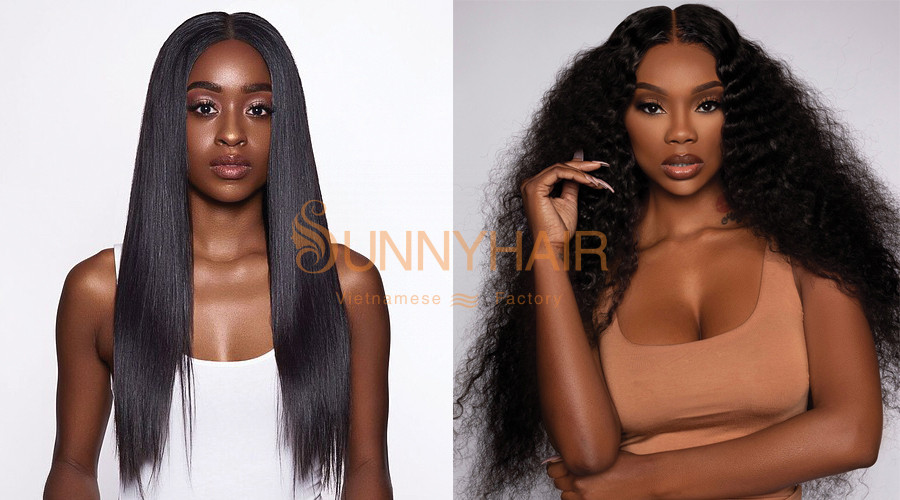
4C Hair Extensions: Perfect Match for Natural Texture
4C hair is known for its tight coils, rich volume, and beautifully natural texture—but it can also be challenging to style, stretch, or protect daily. That’s why 4C hair extensions have become a favorite choice for anyone who wants extra length, fullness, or versatility while still maintaining an authentic look. In this guide, we’ll explore what makes the extensions unique and why they’re the ideal match for natural-textured hair.
What Are 4C Hair Extensions?
4C hair extensions are specifically designed to match the tightest and most delicate curl pattern in the natural hair spectrum—Type 4C hair. This hair type is known for its dense volume, small zig-zag curls, and unique texture that appears fluffy, soft, and full. Unlike looser curl patterns, 4C strands have very little defined curl shape and can shrink up to 75% of their actual length.
Because of this, 4C extensions are crafted to replicate that exact texture, giving users a seamless blend that supports natural hairstyles like twist-outs, puffs, fro styles, and protective looks such as clip-ins, wigs, or sew-ins. Whether made from raw human hair or high-quality virgin hair, 4C extensions aim to preserve authenticity—letting wearers enhance volume or length without losing their natural identity.
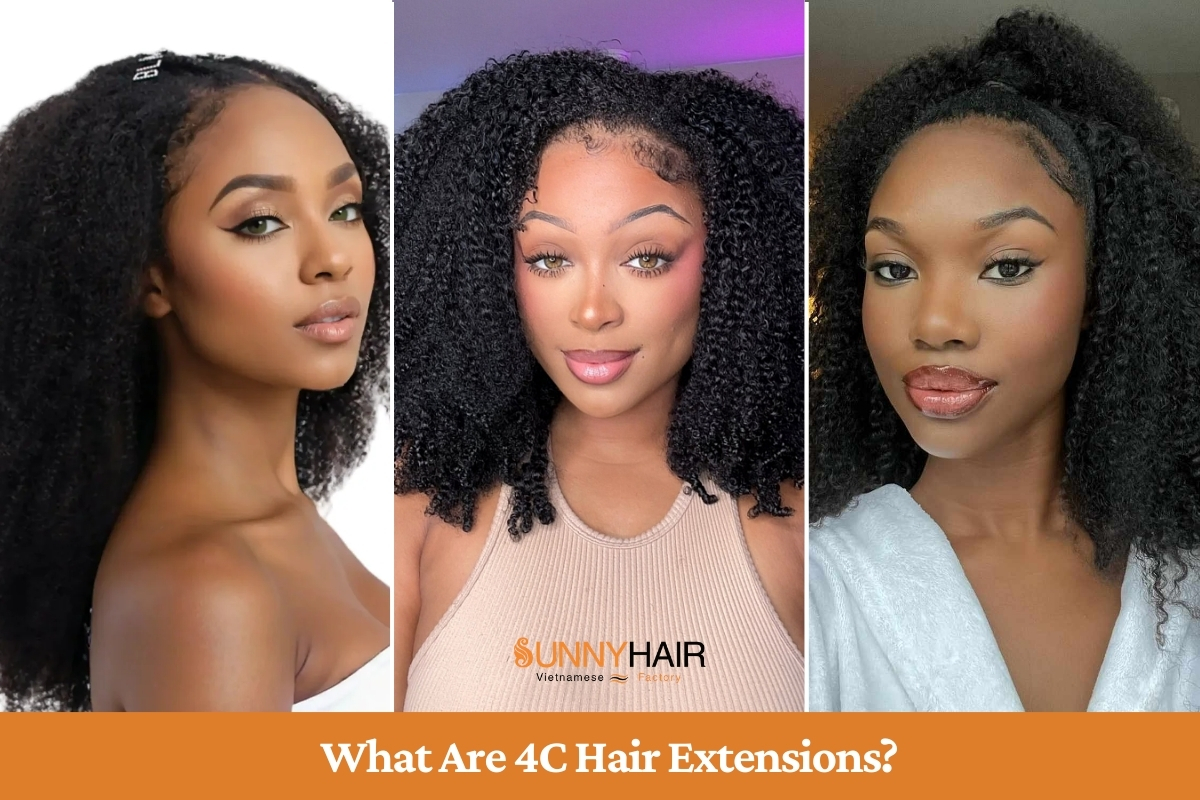
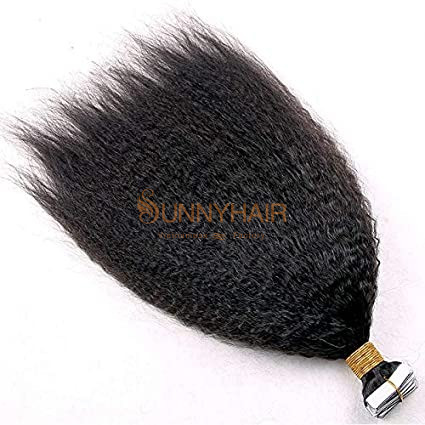
Extensions Made to Mirror True 4C hair
Read more: 1B Hair Color
Key Characteristics of 4C Hair
Understanding what makes 4C hair unique helps explain why a specialized type of extension is necessary.
1. Tight Zig-Zag Pattern
4C curls are extremely tight, forming a small zig-zag pattern that may not always be visible unless the hair is stretched. This gives the hair its iconic dense, fluffy appearance.
2. High Shrinkage (Up to 75%)
4C hair shrinks more than any other curl type. A section of hair that appears 5–6 inches long may stretch out to double its length. Because of this, extensions are often chosen based on stretched length.
3. Fragility and Dryness
The tightness of the curls makes it harder for natural oils to travel down the hair shaft. While 4C hair is beautiful and full, it requires consistent moisture and gentle care.
4. Versatility
Although it may seem difficult to manage, 4C hair is incredibly versatile—perfect for afros, braids, twist-outs, puffs, and natural updos.
Pros and Cons of 4C Hair Extensions
No hair extension type is perfect for everyone. Here’s a clear look at the benefits and challenges of choosing 4C extensions.
Pros
- Seamless blending with natural 4C texture: The biggest advantage is authenticity. When styled correctly, it's nearly impossible to tell where the natural hair ends and the extension begins.
- Versatile styling options: You can add length, volume, color variety, or density while still maintaining a natural look.
- Great for protective styles: 4C extensions support low-manipulation styles that protect your natural hair from breakage.
- Maintains natural identity: Perfect for wearers who want hair that looks fully theirs—not overly sleek or altered.
Other blogs: Blonde 613 Hair Color
Cons
- Requires more moisture and maintenance: Because 4C hair is naturally dry, extensions of this texture also need hydration and conditioning.
- Can tangle faster: The tight coils may interlock if not cared for properly.
- Shrinkage affects length choice: Users must choose length thoughtfully, usually opting for a few inches longer than expected.
4C Hair vs. 4B/4A Textures
4C hair stands out for its tight coils, shrinkage, and fluffy, voluminous look, while 4B and 4A textures offer slightly looser patterns and different styling needs. The table below highlights the key differences to help you understand each texture more clearly.
|
Feature |
4C Hair |
4B Hair |
4A Hair |
|
Curl Pattern |
Very tight, zig-zag coils with almost no defined curl |
Tight “Z-pattern” coils, slightly more defined than 4C |
Defined “S-shaped” curls, most defined in the 4 category |
|
Shrinkage |
Extremely high (up to 75%) |
High (around 50–70%) |
Moderate (around 40–60%) |
|
Texture Feel |
Cotton-like, fluffy, can feel coarse or fine depending on density |
Soft but more structured than 4C |
Soft, springy, and smooth |
|
Ease of Definition |
Hardest to define; often needs heavy creams/gels |
Moderate definition with right products |
Easiest to define curls with minimal product |
|
Moisture Retention |
Struggles most with dryness; needs frequent hydration |
Requires regular moisturizing |
Offers superior moisture retention compared to 4B/4C hair |
|
Breakage Risk |
Highest—needs gentle handling |
Moderate |
Lower compared to 4B/4C |
|
Styling Behavior |
Best for stretched styles (twist-outs, braid-outs, protective styles) |
Works well with twist-outs and defined styles |
Ideal for wash-and-go’s and curl-defining routines |
|
Overall Volume |
Highest volume and density appearance |
Moderate to high |
Moderate |
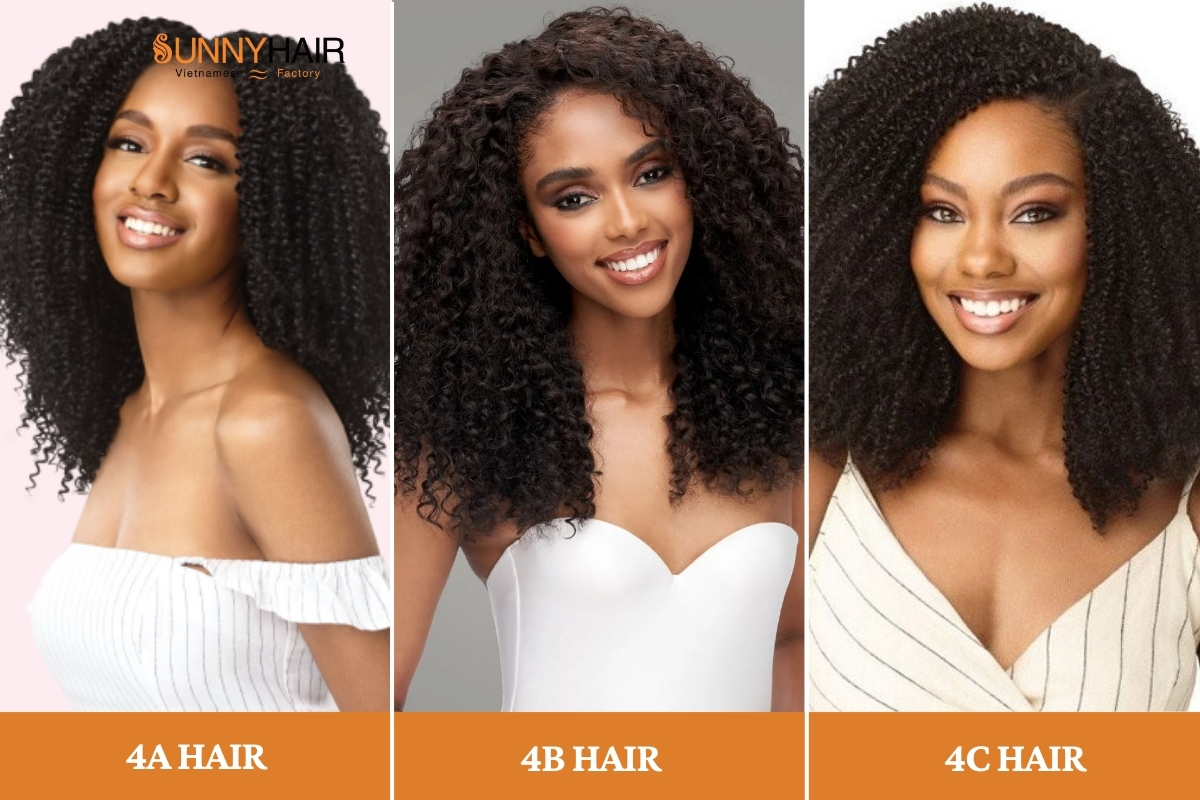
How 4C Coils Differ from Other Type 4 Patterns
Is 4C Hair Right for You?
4C hair extensions are ideal if:
- Your natural hair texture is 4C or very similar.
- You want to enhance your Afro texture rather than change it.
- You prefer protective styling
- You love thick, fluffy, highly textured looks.
- You want your extensions to blend effortlessly with your roots.
These extensions may not be ideal if you prefer silky, defined curls or sleek straight styles. In that case, kinky, straight, or curly textures may suit you better.
How to Properly Maintain 4C Hair Extensions
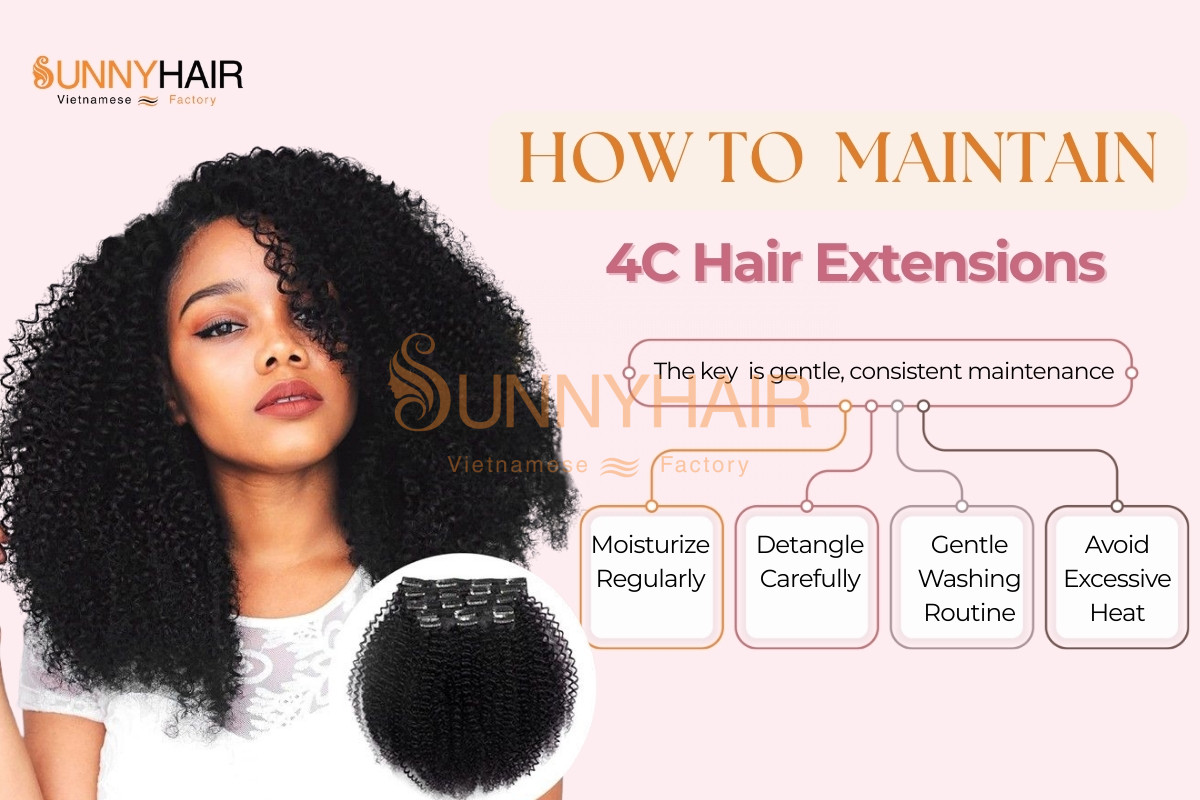
The key to long-lasting, beautiful 4C extensions is gentle, consistent maintenance.
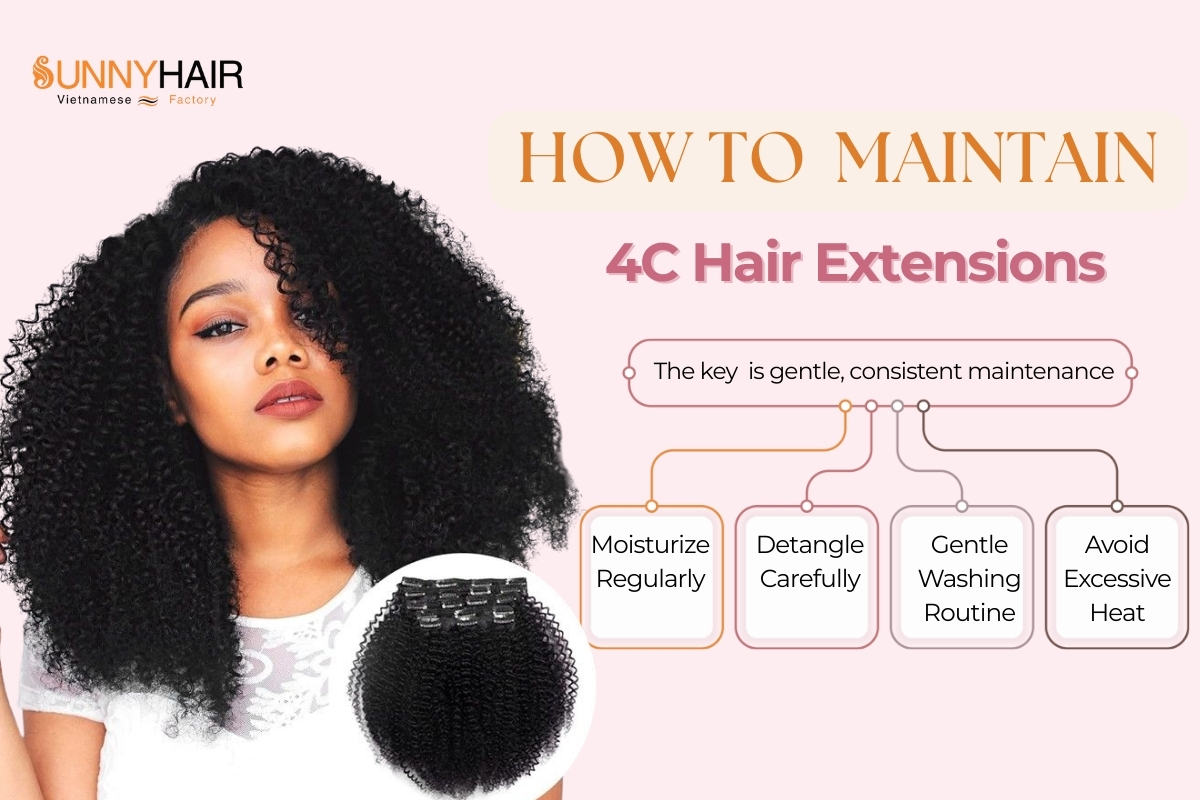
Simple Care for Long-Lasting Coils
1. Moisturize Regularly
- Use leave-in conditioners, hydrating creams, and lightweight oils.
- Avoid heavy buildup that can cause tangling.
2. Detangle Carefully
- Only detangle when the hair is damp and coated with conditioner. Use a wide-tooth comb or your fingers.
- Detangle exclusively on damp, conditioned hair, using either your fingers or a wide-tooth comb.
- Make sure the hair is damp and conditioned before detangling. Opt for your fingers or a wide-tooth comb.
3. Gentle Washing Routine
Wash every 1–2 weeks using sulfate-free shampoo and a rich conditioner.
4. Avoid Excessive Heat
4C textures thrive without heat. If needed, use low settings and always apply heat protectant. Finally, store in a silk/satin bag to maintain moisture and prevent tangles.
Who Should Choose 4C Hair Extensions?
4C hair extensions are a great choice for anyone who wants to boost volume while keeping the natural Afro look. They’re also perfect if you prefer protective styles that blend effortlessly with your real texture.
- Individuals wanting volume and fullness while maintaining natural afro texture
- People seeking a protective style that blends seamlessly
- Anyone with natural 4B–4C hair who dislikes straight or loose-curly extensions
- Users looking for authenticity instead of an altered look
If your natural texture is Type 2 or 3, or if you prefer silky finishes, this may not be the right match.
Read more:
- Hair color guide
- 20 Inch Hair
- Dookie Braids: Unique Style for Every Bold Look
- The Best Tape In Hair Extension Methods and Aftercare for 2025
Conclusion
4C hair extensions are the perfect solution for anyone who wants to enhance their natural coils without losing their authentic texture. With their tight, fluffy pattern and incredible versatility, they blend beautifully with natural 4C hair while supporting protective styles and long-term hair health. By understanding the texture, learning proper care techniques, and choosing a reputable supplier like Sunny Hair, you can enjoy fuller, longer, and more expressive 4C styles with total confidence.
For reliable quality, ethically sourced hair, and true-to-texture 4C extensions, Sunny Hair is an excellent place to start. They offer premium raw and virgin hair collections that match natural Afro textures beautifully, ensuring softness, durability, and long-term wear. Whether you’re looking for clip-ins, sew-ins, or wigs, Sunny Hair provides a full range of textured options crafted to blend seamlessly with 4C hair.